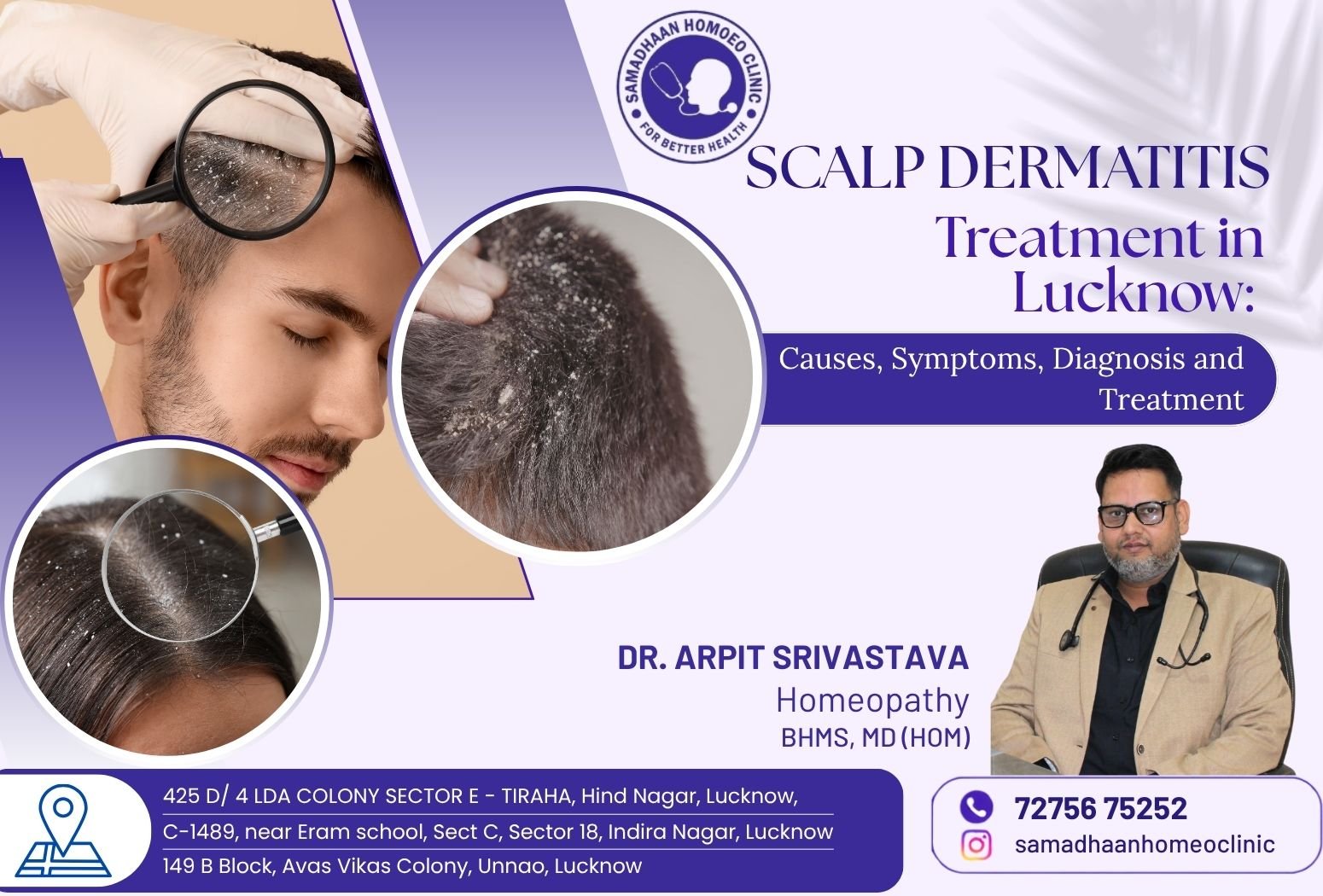
Scalp Dermatitis Treatment in Lucknow begins with understanding why the scalp becomes itchy, flaky, red, dry, oily, or irritated. Scalp dermatitis is a common skin concern that can affect people of different ages. Depending on the underlying cause, it may lead to dandruff-like flakes, redness, itching, scaling, dryness, burning, or increased scalp sensitivity.
Some people experience mild symptoms that come and go, while others may have persistent scalp irritation that affects their comfort and daily routine. Since several scalp conditions can produce similar symptoms, identifying the actual cause is an important first step before deciding on a treatment approach.
At Samadhaan Homoeo Clinic, patients receive individualised care based on their symptoms, health history, lifestyle, and overall well-being. The clinic has been providing homoeopathic healthcare since 1995 and focuses on personalised patient care.
Dr. Arpit Srivastava (MD Hom) provides individualised consultations and helps patients understand their skin and scalp concerns and available care options. For anyone searching for a Homeopathic Doctor in Lucknow for recurring scalp concerns, a professional consultation can help determine whether the symptoms are related to dermatitis or another scalp condition.
In this comprehensive guide, we will discuss the symptoms of scalp dermatitis, possible causes and triggers, different types of scalp dermatitis, diagnosis, treatment and management options, lifestyle considerations, and when you should consult a healthcare professional.
What Is Scalp Dermatitis? A Homeopathic Doctor in Lucknow Explains
Scalp dermatitis refers to inflammation or irritation of the skin of the scalp. It may develop because of different causes, including seborrheic dermatitis, contact dermatitis, allergic reactions, psoriasis, fungal infections, or irritation from hair-care products.
Depending on the underlying condition, scalp dermatitis may cause itching, redness, scaling, flaking, dryness, or greasy patches. Some individuals may notice small flakes on their clothes or shoulders, while others may experience thicker scales or significant irritation.
Seborrheic dermatitis is one of the common causes of scalp inflammation and is often associated with dandruff. It can also affect areas where the skin produces more oil, such as the scalp, eyebrows, sides of the nose, ears, and beard area.
Scalp dermatitis is not simply a result of poor hygiene. Using harsh products or washing the scalp too aggressively can sometimes increase irritation, while an unsuitable cleansing routine may allow oil and scale to accumulate.
If you have persistent itching, redness, scaling, or flaking, professional evaluation can help identify the underlying cause. Individuals looking for Scalp Dermatitis Treatment in Lucknow should consider getting the condition properly assessed before trying multiple home remedies or medicated products.
What Are the Common Symptoms of Scalp Dermatitis?
The symptoms of scalp dermatitis can vary depending on the cause and severity of inflammation.
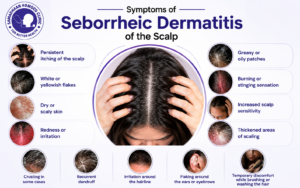
Common symptoms may include:
- Persistent itching of the scalp
- White or yellowish flakes
- Dry or scaly skin
- Redness or irritation
- Greasy or oily patches
- Burning or stinging sensation
- Increased scalp sensitivity
- Thickened areas of scaling
- Crusting in some cases
- Recurrent dandruff
- Irritation around the hairline
- Flaking around the ears or eyebrows
- Temporary discomfort while brushing or washing the hair
Some people may have only one or two symptoms, while others may experience several symptoms at the same time.
Symptoms may also become more noticeable during particular seasons, periods of stress, or after exposure to certain hair-care products.
If you are experiencing these symptoms and searching for Scalp Dermatitis in Lucknow, it is important to remember that itching and scaling can occur in several different scalp conditions. Therefore, proper assessment is preferable to self-diagnosis.
Why Should You Take Scalp Dermatitis Symptoms Seriously?
Mild dandruff or occasional itching may not always indicate a serious problem. However, persistent or worsening scalp symptoms should not be ignored.
Continuous itching may encourage repeated scratching, which can damage the skin and increase irritation. In some cases, an underlying scalp condition may also require specific treatment.
Early evaluation can help you:
- Identify the likely cause of scalp irritation
- Understand whether the condition is dermatitis, psoriasis, infection, or another problem
- Identify possible triggers
- Choose appropriate scalp-care measures
- Avoid unnecessary self-medication
- Reduce repeated exposure to irritating products
- Understand how to manage recurrent symptoms
- Protect the overall health of the scalp
- Discuss appropriate treatment options with a healthcare professional
If you are considering Scalp Dermatitis Treatment in Lucknow, getting an accurate assessment should be an important first step.
What Causes Scalp Dermatitis?
Scalp dermatitis can have several possible causes. The underlying reason may differ from one person to another.
Seborrheic Dermatitis
Seborrheic dermatitis is a common inflammatory skin condition that can affect the scalp. It may cause flakes, itching, redness, and greasy scaling.
The condition is associated with skin oil, naturally occurring microorganisms on the skin, and individual inflammatory responses.
Symptoms may improve and return over time. Some people notice that the condition becomes more noticeable during particular seasons or periods of stress.
Contact Dermatitis
Contact dermatitis can develop when the scalp reacts to a substance that comes into contact with the skin.
Possible triggers include:
- Hair dyes
- Shampoos
- Conditioners
- Hair sprays
- Styling gels
- Fragrances
- Essential oils
- Other cosmetic ingredients
Some people experience irritation, while others may develop an allergic reaction to a particular ingredient.
If scalp symptoms started soon after using a new hair product, discussing the product history with a healthcare professional can be helpful.
Scalp Psoriasis
Psoriasis can also affect the scalp and may cause well-defined red areas covered with thicker, silvery-white scales.
Scalp psoriasis may extend beyond the hairline and can sometimes affect other areas of the body.
Because psoriasis and dermatitis can sometimes appear similar, professional evaluation can help distinguish between them.
Fungal Infections
Certain fungal infections can affect the scalp, particularly in children. Scalp ringworm, also known as tinea capitis, may cause scaling, itching, broken hairs, or patches of hair loss.
A fungal infection requires appropriate medical treatment and should not be treated only as ordinary dandruff.
Other Contributing Factors
Other factors may contribute to scalp irritation, including:
- Cold or dry weather
- Excessive sweating
- Stress
- Hormonal changes
- Certain medications
- Frequent use of styling products
- Harsh hair-care products
- Individual skin sensitivity
Identifying the specific trigger can be useful for long-term management.
Where Does Scalp Dermatitis Usually Appear?
Scalp dermatitis primarily affects the scalp, but inflammation may also occur in nearby areas.
Commonly affected areas may include:
- Scalp
- Hairline
- Behind the ears
- Around the ears
- Eyebrows
- Beard area
- Sides of the nose
- Forehead
The exact pattern depends on the underlying condition.
For example, seborrheic dermatitis may affect several oily areas of the face in addition to the scalp, whereas contact dermatitis may be concentrated in areas exposed to a particular hair product.
If you are searching for Scalp Dermatitis in Lucknow, understanding the location and pattern of the symptoms can help your healthcare professional during the evaluation.
Can Scalp Dermatitis Affect Hair?
Scalp dermatitis does not usually cause permanent hair loss by itself. However, severe inflammation, repeated scratching, or an underlying scalp disorder may contribute to temporary hair shedding or hair breakage.
Certain conditions that may look like scalp dermatitis, such as fungal infections or scalp psoriasis, can also affect hair growth or cause areas of hair loss.
If you notice:
- Sudden hair loss
- Circular bald patches
- Broken hairs
- Pus-filled lesions
- Thick crusting
- Painful scalp areas
- Significant inflammation
you should seek professional medical evaluation rather than assuming that the problem is ordinary dandruff.
The underlying cause needs to be identified before deciding on treatment.
Is Every Itchy or Flaky Scalp Scalp Dermatitis?
No. Itching and flaking can occur because of several different conditions.
Possible causes include:
- Dandruff
- Seborrheic dermatitis
- Contact dermatitis
- Scalp psoriasis
- Fungal infection
- Dry scalp
- Allergic reactions
- Product-related irritation
- Other dermatological conditions
For example, a dry scalp may produce fine flakes without significant redness, while seborrheic dermatitis can cause greasy scales and inflammation.
Scalp psoriasis may produce thicker plaques, and fungal infections may be associated with broken hairs or areas of hair loss.
Because these conditions can require different approaches, self-diagnosis may lead to inappropriate treatment.
If you have unexplained or persistent scalp symptoms, a professional evaluation is recommended.
How Is Scalp Dermatitis Diagnosed?
Scalp dermatitis is generally assessed through a detailed medical history and physical examination of the scalp and surrounding skin.
During a consultation, the healthcare professional may ask about:
- When the symptoms first appeared
- Whether the symptoms are continuous or recurring
- The severity of itching
- Changes in the amount of scaling
- Hair products currently being used
- Recent hair colouring or chemical treatments
- Previous scalp conditions
- Family history of skin disorders
- Any associated hair loss
- Previous treatments and their results
- Other medical conditions
The scalp may be examined closely to determine the pattern and appearance of scaling, redness, plaques, crusting, or hair changes.
If a fungal infection or another condition is suspected, additional testing may sometimes be recommended.
Correct diagnosis is particularly important before beginning Scalp Dermatitis Treatment in Lucknow.
When Should You Consult a Homeopathic Doctor for Scalp Dermatitis?
You should consider seeking professional advice if scalp symptoms are persistent, recurrent, severe, or interfering with daily life.
You should seek medical evaluation if:
- Itching continues for a long time
- Flaking becomes severe
- The scalp becomes very red or inflamed
- Thick scales develop
- The scalp becomes painful
- Swelling or crusting develops
- Hair loss occurs
- Broken hairs appear
- Symptoms develop after using a new hair product
- Symptoms spread to the face or ears
- Home remedies are not helping
- Symptoms repeatedly return after temporary improvement
If you prefer to explore homoeopathic care, a consultation with a Homeopathic Doctor in Lucknow can provide an opportunity to discuss your symptoms, health history, lifestyle, and concerns.
However, a homoeopathic consultation should not replace appropriate dermatological assessment when the diagnosis is uncertain, especially when there is significant inflammation, infection, or hair loss.
What Can You Do After Noticing Scalp Dermatitis Symptoms?
If you notice persistent itching or scaling, avoid immediately applying several different products to the scalp.
Instead, consider a few practical steps.
Observe the Symptoms
Note when the itching or flaking began and whether symptoms become worse after using a particular product.
Avoid Unnecessary Self-Medication
Do not repeatedly use steroid creams, antifungal medicines, medicated shampoos, or other treatments without appropriate medical advice.
Use Gentle Hair-Care Products
Choose hair-care products that are appropriate for your scalp and avoid products that appear to trigger irritation.
Avoid Excessive Scratching
Scratching may temporarily relieve itching but can damage the scalp and increase irritation.
Keep the Scalp Clean
Follow an appropriate washing routine based on your scalp type and the advice of a healthcare professional.
Get the Condition Evaluated
If symptoms persist or repeatedly return, professional assessment can help determine the underlying cause.
These simple steps can help prevent unnecessary irritation and make it easier to understand the factors contributing to your scalp symptoms.
Can Stress Make Scalp Dermatitis Worse?
Stress is commonly discussed by people with recurring skin conditions. While stress is not necessarily the sole cause of scalp dermatitis, it may influence overall well-being and can be associated with worsening or recurrence of some inflammatory skin conditions.
Persistent itching and visible flakes can themselves become stressful. This may create a cycle in which discomfort affects sleep, concentration, and emotional well-being.
For this reason, managing stress can be a useful part of overall scalp care.
Healthy habits may include:
- Regular physical activity
- Adequate sleep
- Relaxation techniques
- A balanced daily routine
- Staying hydrated
- Spending time on enjoyable activities
- Seeking professional support when needed
Stress management should complement, rather than replace, appropriate medical evaluation and treatment.

What Should You Eat for a Healthy Scalp?
There is no specific food or special diet proven to cure scalp dermatitis.
However, maintaining a balanced and nutritious diet supports general health and normal skin function.
A healthy eating pattern may include:
- Fresh vegetables
- Seasonal fruits
- Whole grains
- Pulses and legumes
- Adequate protein
- Nuts and seeds
- Healthy fats
- Sufficient water
Avoid extreme diets based on claims that particular foods can permanently cure scalp dermatitis.
If you have a nutritional deficiency or another medical condition, your healthcare professional may recommend appropriate dietary changes.
A balanced diet should complement proper scalp care rather than replace medical treatment.
Can Homeopathy Cure Scalp Dermatitis?
Patients with recurring itching, dandruff, and scalp irritation sometimes search for natural or homoeopathic solutions.
It is important to approach this topic realistically. There is currently insufficient high-quality scientific evidence to establish homeopathy as a cure for scalp dermatitis.
At Samadhaan Homoeo Clinic, the approach is centred on understanding the patient’s symptoms, health history, lifestyle, and overall well-being. Patients interested in homoeopathic care can discuss their concerns and expectations during an individualised consultation.
However, patients should not delay appropriate medical evaluation, particularly if there is severe inflammation, suspected infection, significant scaling, or hair loss.
If symptoms are newly appearing, rapidly worsening, or not responding to basic scalp care, identifying the underlying condition should remain the priority.
Why Early Evaluation Matters in Scalp Dermatitis
Scalp dermatitis can be recurrent, and the symptoms may change over time. Some people experience occasional flaking, while others may have persistent inflammation and itching.
Early evaluation can help identify the underlying condition and possible triggers. It can also prevent people from repeatedly trying unsuitable products or treatments.
Depending on the diagnosis, dermatological management may include medicated shampoos, antifungal treatment, topical anti-inflammatory medicines, moisturising measures, or other treatments recommended by a qualified healthcare professional.
Not every treatment is suitable for every patient. The choice depends on the cause, severity, affected areas, age, medical history, and other individual factors.
Therefore, the goal should not simply be to find a quick solution. The goal should be to understand why the scalp is irritated and develop an appropriate care plan.
Why Choose Samadhaan Homoeo Clinic for Personalised Skin Care?
Samadhaan Homoeo Clinic has been providing homoeopathic healthcare since 1995. The clinic focuses on personalised care and aims to understand each patient’s symptoms, medical history, lifestyle, and overall health.
The clinic’s team includes experienced homoeopathic doctors, including Dr. Arpit Srivastava (MD Hom), Dr. R.K. Srivastava, and Dr. Rashmi Srivastava.
Patients choose Samadhaan Homoeo Clinic for several reasons.
Experienced Doctors
The clinic is supported by experienced homoeopathic practitioners who provide individualised consultations and patient-focused care.
Personalised Treatment Approach
Every patient is different. Treatment discussions are based on individual symptoms, health history, lifestyle, and overall well-being.
Holistic Care
The clinic considers physical, emotional, and lifestyle factors while understanding a patient’s health concerns.
Trusted Since 1995
Samadhaan Homoeo Clinic has served patients in Lucknow, Unnao, and surrounding areas for decades.
Patient-Centred Consultation
Patients are encouraged to discuss their symptoms and concerns openly so that they can better understand their health.
Conveniently Serving Lucknow
Patients from areas including Indira Nagar, Gomti Nagar, Alambagh, Ashiyana, Hazratganj, Jankipuram, Mahanagar, Rajajipuram, Kanpur Road, Vrindavan Yojana, Hind Nagar, and nearby locations can access the clinic’s healthcare services.
Meet Dr. Arpit Srivastava (MD Hom)
Dr. Arpit Srivastava (MD Hom) brings advanced knowledge and modern homoeopathic expertise to Samadhaan Homoeo Clinic.
He is dedicated to providing personalised care and helping patients understand their health concerns. His approach focuses on individual symptoms, medical history, lifestyle, patient education, and overall well-being.
For patients looking for a Homeopathic Doctor in Lucknow, Dr. Arpit Srivastava provides consultations with an emphasis on individualised care and patient education.
If you have persistent itching, flakes, redness, burning, or other unexplained scalp changes, discussing your concerns with a qualified healthcare professional can help you understand what may be causing the symptoms and what options are available.
Services Offered at Samadhaan Homoeo Clinic
Samadhaan Homoeo Clinic provides personalised homoeopathic care for a range of health concerns, including:
- Scalp Dermatitis
- Seborrheic Dermatitis
- Contact Dermatitis
- Vitiligo
- Psoriasis
- Eczema
- Acne
- Allergies
- Warts
- Lichen Planus
- Rheumatoid Arthritis
- Osteoarthritis
- Joint Pain
- Asthma
- Bronchitis
- Sinusitis
- Ovarian Cysts
- Uterine Fibroids
- Hormonal Concerns
- Kidney Stones
- Liver Disorders
- Urinary Health Concerns
The clinic’s treatment approach is individualised according to each patient’s symptoms and health history.
Frequently Asked Questions About Scalp Dermatitis
What is the main cause of scalp dermatitis?
Scalp dermatitis can have different causes. Seborrheic dermatitis, contact reactions to hair products, psoriasis, fungal infections, and other forms of scalp irritation may produce similar symptoms. Identifying the underlying cause is important for appropriate management.
What are the common symptoms of scalp dermatitis?
Common symptoms include itching, redness, dryness, flaking, greasy scales, irritation, burning, and increased scalp sensitivity. The exact symptoms depend on the underlying condition.
Is scalp dermatitis contagious?
Most common forms of dermatitis, including seborrheic dermatitis and contact dermatitis, are not contagious. However, some scalp infections, such as fungal infections, can spread between people. Therefore, an accurate diagnosis is important.
Can stress make scalp dermatitis worse?
Stress does not necessarily cause scalp dermatitis, but it may affect overall well-being and can be associated with worsening of some inflammatory skin conditions. Maintaining good sleep, relaxation, physical activity, and emotional support may be helpful.
Can scalp dermatitis cause hair loss?
Scalp dermatitis itself does not usually cause permanent hair loss. However, severe inflammation, repeated scratching, or another underlying scalp condition may contribute to temporary shedding or hair breakage. Sudden or significant hair loss should be evaluated by a healthcare professional.
Should I scratch an itchy scalp?
It is better to avoid excessive scratching. Scratching can damage the scalp, increase irritation, and potentially introduce infection through broken skin.
Can homeopathy cure scalp dermatitis?
There is currently insufficient high-quality scientific evidence demonstrating that homeopathy can cure scalp dermatitis. Patients interested in homoeopathic care should discuss their expectations with a qualified practitioner and should not delay appropriate medical evaluation.
What should I eat for a healthy scalp?
There is no specific diet proven to cure scalp dermatitis. A balanced diet containing vegetables, fruits, whole grains, pulses, adequate protein, nuts, seeds, and healthy fats can support overall health.
When should I see a doctor for scalp dermatitis?
You should seek professional evaluation when itching, scaling, redness, or irritation is persistent, severe, recurrent, associated with hair loss, painful, or not improving with basic scalp care.
Conclusion: Do Not Ignore Persistent Scalp Dermatitis Symptoms
Scalp dermatitis can initially look like ordinary dandruff or a temporary scalp problem. However, persistent itching, redness, scaling, burning, or recurring flakes may indicate an underlying skin condition that deserves proper evaluation.
Not every itchy or flaky scalp is caused by the same problem. Seborrheic dermatitis, contact dermatitis, psoriasis, fungal infections, and other scalp conditions can have overlapping symptoms but may require different management approaches.
Early evaluation can help identify the likely cause, understand possible triggers, and reduce unnecessary self-treatment.
If you are searching for Scalp Dermatitis Treatment in Lucknow, start with an accurate assessment and an informed conversation with a qualified healthcare professional. Patients interested in homoeopathic care can also consult Dr. Arpit Srivastava (MD Hom) at Samadhaan Homoeo Clinic to discuss their symptoms, health history, lifestyle, and individual concerns.
With personalised attention, appropriate medical guidance, patient education, and healthy scalp-care habits, people experiencing recurring scalp irritation can take informed steps toward managing their symptoms and supporting their overall well-being.