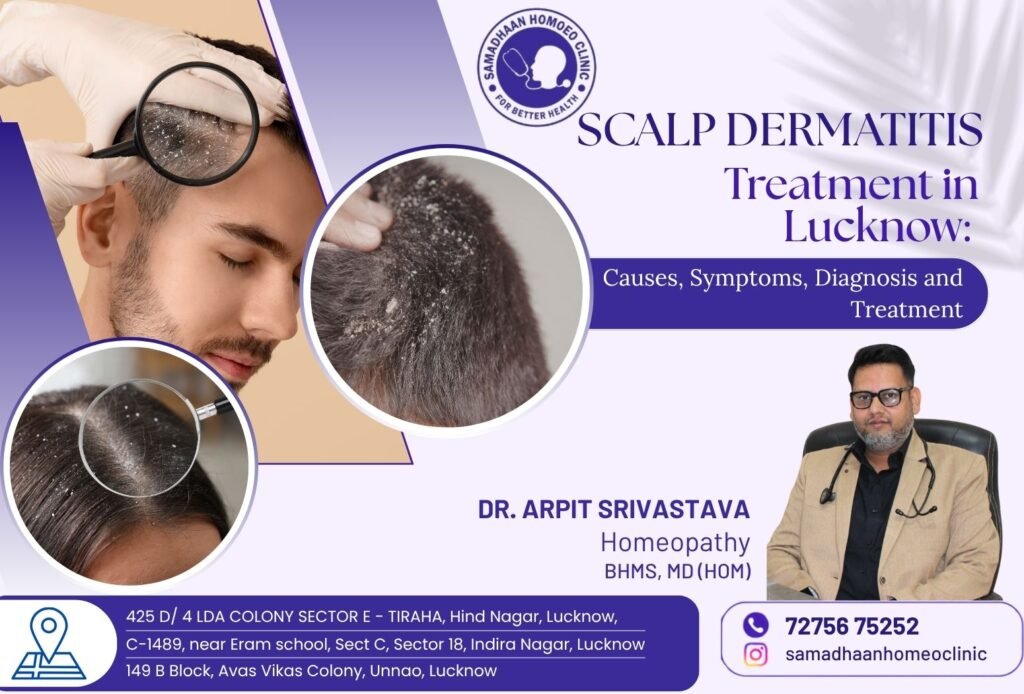
Scalp Dermatitis Treatment in Lucknow: Causes, Symptoms, Diagnosis and Treatment
Scalp Dermatitis Treatment in Lucknow begins with understanding why the scalp becomes itchy, flaky, red, dry, oily, or irritated. Scalp dermatitis is a common skin concern that can affect people of different ages. Depending on the underlying cause, it may lead to dandruff-like flakes, redness, itching, scaling, dryness, burning, or increased scalp sensitivity. Some people experience mild symptoms that come and go, while others may have persistent scalp irritation that affects their comfort and daily routine. Since several scalp conditions can produce similar symptoms, identifying the actual cause is an important first step before deciding on a treatment approach. At Samadhaan Homoeo Clinic, patients receive individualised care based on their symptoms, health history, lifestyle, and overall well-being. The clinic has been providing homoeopathic healthcare since 1995 and focuses on personalised patient care. Dr. Arpit Srivastava (MD Hom) provides individualised consultations and helps patients understand their skin and scalp concerns and available care options. For anyone searching for a Homeopathic Doctor in Lucknow for recurring scalp concerns, a professional consultation can help determine whether the symptoms are related to dermatitis or another scalp condition. In this comprehensive guide, we will discuss the symptoms of scalp dermatitis, possible causes and triggers, different types of scalp dermatitis, diagnosis, treatment and management options, lifestyle considerations, and when you should consult a healthcare professional. What Is Scalp Dermatitis? A Homeopathic Doctor in Lucknow Explains Scalp dermatitis refers to inflammation or irritation of the skin of the scalp. It may develop because of different causes, including seborrheic dermatitis, contact dermatitis, allergic reactions, psoriasis, fungal infections, or irritation from hair-care products. Depending on the underlying condition, scalp dermatitis may cause itching, redness, scaling, flaking, dryness, or greasy patches. Some individuals may notice small flakes on their clothes or shoulders, while others may experience thicker scales or significant irritation. Seborrheic dermatitis is one of the common causes of scalp inflammation and is often associated with dandruff. It can also affect areas where the skin produces more oil, such as the scalp, eyebrows, sides of the nose, ears, and beard area. Scalp dermatitis is not simply a result of poor hygiene. Using harsh products or washing the scalp too aggressively can sometimes increase irritation, while an unsuitable cleansing routine may allow oil and scale to accumulate. If you have persistent itching, redness, scaling, or flaking, professional evaluation can help identify the underlying cause. Individuals looking for Scalp Dermatitis Treatment in Lucknow should consider getting the condition properly assessed before trying multiple home remedies or medicated products. What Are the Common Symptoms of Scalp Dermatitis? The symptoms of scalp dermatitis can vary depending on the cause and severity of inflammation. Common symptoms may include: Persistent itching of the scalp White or yellowish flakes Dry or scaly skin Redness or irritation Greasy or oily patches Burning or stinging sensation Increased scalp sensitivity Thickened areas of scaling Crusting in some cases Recurrent dandruff Irritation around the hairline Flaking around the ears or eyebrows Temporary discomfort while brushing or washing the hair Some people may have only one or two symptoms, while others may experience several symptoms at the same time. Symptoms may also become more noticeable during particular seasons, periods of stress, or after exposure to certain hair-care products. If you are experiencing these symptoms and searching for Scalp Dermatitis in Lucknow, it is important to remember that itching and scaling can occur in several different scalp conditions. Therefore, proper assessment is preferable to self-diagnosis. Why Should You Take Scalp Dermatitis Symptoms Seriously? Mild dandruff or occasional itching may not always indicate a serious problem. However, persistent or worsening scalp symptoms should not be ignored. Continuous itching may encourage repeated scratching, which can damage the skin and increase irritation. In some cases, an underlying scalp condition may also require specific treatment. Early evaluation can help you: Identify the likely cause of scalp irritation Understand whether the condition is dermatitis, psoriasis, infection, or another problem Identify possible triggers Choose appropriate scalp-care measures Avoid unnecessary self-medication Reduce repeated exposure to irritating products Understand how to manage recurrent symptoms Protect the overall health of the scalp Discuss appropriate treatment options with a healthcare professional If you are considering Scalp Dermatitis Treatment in Lucknow, getting an accurate assessment should be an important first step. What Causes Scalp Dermatitis? Scalp dermatitis can have several possible causes. The underlying reason may differ from one person to another. Seborrheic Dermatitis Seborrheic dermatitis is a common inflammatory skin condition that can affect the scalp. It may cause flakes, itching, redness, and greasy scaling. The condition is associated with skin oil, naturally occurring microorganisms on the skin, and individual inflammatory responses. Symptoms may improve and return over time. Some people notice that the condition becomes more noticeable during particular seasons or periods of stress. Contact Dermatitis Contact dermatitis can develop when the scalp reacts to a substance that comes into contact with the skin. Possible triggers include: Hair dyes Shampoos Conditioners Hair sprays Styling gels Fragrances Essential oils Other cosmetic ingredients Some people experience irritation, while others may develop an allergic reaction to a particular ingredient. If scalp symptoms started soon after using a new hair product, discussing the product history with a healthcare professional can be helpful. Scalp Psoriasis Psoriasis can also affect the scalp and may cause well-defined red areas covered with thicker, silvery-white scales. Scalp psoriasis may extend beyond the hairline and can sometimes affect other areas of the body. Because psoriasis and dermatitis can sometimes appear similar, professional evaluation can help distinguish between them. Fungal Infections Certain fungal infections can affect the scalp, particularly in children. Scalp ringworm, also known as tinea capitis, may cause scaling, itching, broken hairs, or patches of hair loss. A fungal infection requires appropriate medical treatment and should not be treated only as ordinary dandruff. Other Contributing Factors Other factors may contribute to scalp irritation, including: Cold or dry weather Excessive sweating Stress Hormonal changes Certain medications Frequent use of styling products Harsh hair-care products Individual skin sensitivity Identifying the specific