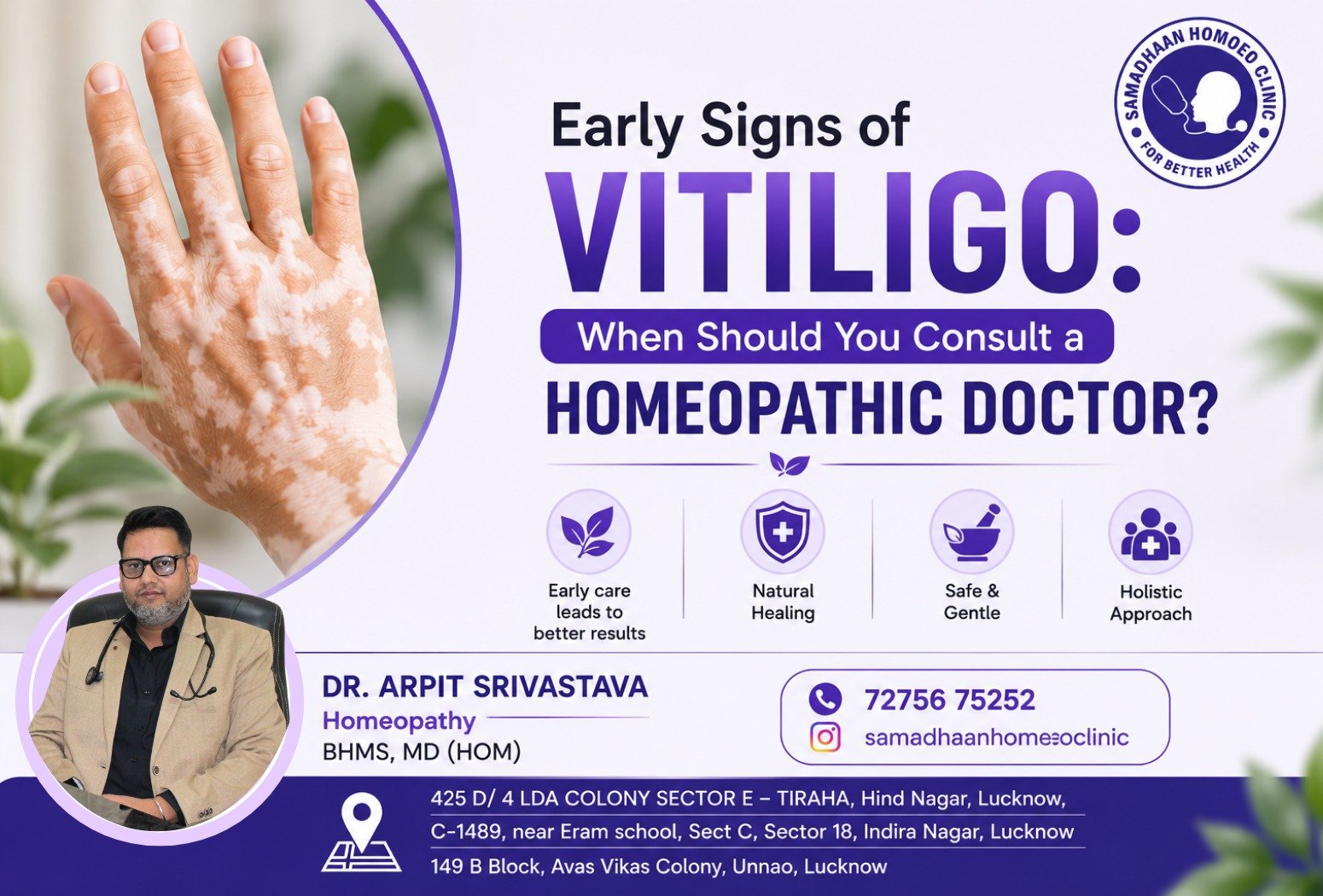
What Is Vitiligo? A Homeopathic Doctor in Lucknow Explains begins with recognising changes in the skin and getting the right medical evaluation at the right time. Vitiligo is a skin condition in which areas of the skin lose their normal colour because the cells responsible for producing melanin are damaged or destroyed. It can affect people of any age, skin type, or gender and may appear on different parts of the body.
The first signs of vitiligo can sometimes be easy to overlook. A small pale patch on the hand, face, lips, around the eyes, or another part of the body may initially look like a minor skin change. However, if the patch gradually becomes whiter, increases in size, or new patches begin to appear, it is important to consult a qualified healthcare professional for proper assessment.
At Samadhaan Homoeo Clinic, patients receive individualised care based on their symptoms, health history, lifestyle, and overall well-being. The clinic has been providing homoeopathic healthcare since 1995 and focuses on personalised patient care.
Dr. Arpit Srivastava (MD Hom) provides individualised consultations and helps patients understand their skin concerns and available care options. For anyone searching for a Homeopathic Doctor in Lucknow for vitiligo, an early consultation can help clarify whether a change in skin colour is actually vitiligo or another skin condition that may look similar.
In this comprehensive guide, we will discuss the early signs of vitiligo, possible causes and risk factors, common areas affected, diagnosis, when you should consult a doctor, lifestyle considerations, and the importance of personalised care.
What Is Vitiligo? A Homeopathic Doctor in Lucknow Explains
Vitiligo is a chronic skin condition characterised by the development of lighter or completely white patches on the skin. These patches occur when melanocytes, the cells responsible for producing melanin, are lost or stop functioning normally.
Melanin gives the skin, hair, and some other parts of the body their natural colour. When melanocytes are absent or significantly reduced in a particular area, that area can appear much lighter than the surrounding skin.
Vitiligo is generally considered an autoimmune condition. In many cases, the immune system mistakenly attacks melanocytes. However, the exact reason why this happens is not completely understood.
Vitiligo is not contagious. It cannot spread from one person to another through touching, sharing food, sitting together, or other everyday contact.
It is also important to understand that vitiligo is not caused by poor hygiene. It is a medical skin condition that deserves proper evaluation and understanding rather than stigma or unnecessary home remedies.
If you notice a new white or pale patch, consulting a dermatologist can help confirm the diagnosis. Patients who are interested in complementary homoeopathic care may also discuss their concerns with a Homeopathic Doctor in Lucknow while continuing appropriate medical evaluation and treatment.
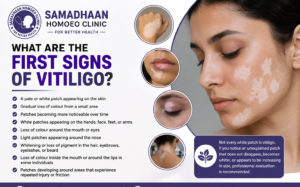
What Are the First Signs of Vitiligo?
The early signs of vitiligo can vary from person to person. In many cases, the first noticeable symptom is a small area of skin that becomes lighter than the surrounding skin.
Some common early signs include:
- A pale or white patch appearing on the skinWhat Are the First Signs of Vitiligo?
- Gradual loss of colour from a small area
- Patches becoming more noticeable over time
- White patches appearing on the hands, face, feet, or arms
- Loss of colour around the mouth or eyes
- Light patches appearing around the nose
- Whitening or loss of pigment in the hair, eyebrows, eyelashes, or beard
- Loss of colour inside the mouth or around the lips in some individuals
- Patches developing around areas that experience repeated injury or friction
One important point is that not every white patch is vitiligo. Fungal infections, eczema, post-inflammatory changes, pityriasis alba, scars, and other skin conditions can also cause lighter areas on the skin.
Therefore, self-diagnosis can be difficult.
If you notice an unexplained patch that does not disappear, becomes whiter, or appears to be increasing in size, professional evaluation is recommended.
Why Should You Take Early Signs of Vitiligo Seriously?
A small white patch may not cause pain, itching, or any other physical discomfort. Because of this, some people may ignore it for months.
However, early evaluation is valuable because it helps determine the actual cause of the skin change. If the condition is vitiligo, understanding its type, extent, and progression can help a healthcare professional discuss suitable management options.
According to the personalised-care approach followed at Samadhaan Homoeo Clinic, every patient should be evaluated according to their individual symptoms, medical history, lifestyle, and overall health rather than receiving a one-size-fits-all plan.
Early consultation can help you:
- Confirm whether the patch is actually vitiligo
- Identify other possible causes of depigmentation
- Understand whether the condition is stable or changing
- Discuss suitable treatment and management options
- Address concerns about visible patches
- Understand how to protect depigmented skin from sun exposure
- Receive guidance about long-term skin care
- Get support for the emotional impact of visible skin changes
If you are considering Vitiligo Treatment in Lucknow, getting a proper diagnosis should be the first step.
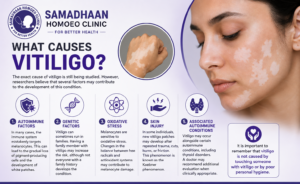
What Causes Vitiligo?
The exact cause of vitiligo is still being studied. However, researchers believe that several factors may contribute to the development of this condition.
Autoimmune Factors
In many cases, the immune system mistakenly targets melanocytes. This can lead to the gradual loss of pigment-producing cells and the development of white patches.
Genetic Factors
Vitiligo can sometimes run in families. Having a family member with vitiligo may increase the risk, although not everyone with a family history develops the condition.
Oxidative Stress
Melanocytes are sensitive to oxidative stress. Changes in the balance between free radicals and antioxidant systems may contribute to melanocyte damage.
Skin Injury
In some individuals, new vitiligo patches may develop after repeated trauma, cuts, burns, or friction. This phenomenon is known as the Koebner phenomenon.
Associated Autoimmune Conditions
Vitiligo may occur alongside certain autoimmune conditions, including thyroid disorders. A doctor may recommend additional evaluation when clinically appropriate.
It is important to remember that vitiligo is not caused by touching someone with vitiligo or by poor personal hygiene.
Where Does Vitiligo Usually Appear?
Vitiligo can develop on almost any area of the body. However, certain areas are more commonly affected.
These may include:
- Face
- Hands
- Fingers
- Feet
- Elbows
- Knees
- Around the eyes
- Around the mouth
- Armpits
- Groin
- Genital area
- Areas exposed to repeated friction
Some people develop only a few small patches, while others may develop more extensive depigmentation.
The pattern and progression can differ considerably between individuals. Therefore, the appearance of one small patch does not necessarily indicate how the condition will progress in the future.
Can Vitiligo Affect Hair and Other Areas?
Yes. Vitiligo does not always affect only the skin.
Some people may experience loss of pigment in:
- Eyebrows
- Eyelashes
- Beard
- Scalp hair
- Other body hair
In some cases, depigmentation may also affect areas such as the lips or inside the mouth.
These changes do not necessarily mean that the condition is severe. However, they should be discussed with a qualified healthcare professional as part of the overall assessment.
Is Every White Patch on the Skin Vitiligo?
No. Not every white or pale patch on the skin is vitiligo.
Several conditions can cause changes in skin colour. These include certain fungal infections, eczema, post-inflammatory hypopigmentation, pityriasis alba, scars, and other dermatological conditions.
For example, some fungal infections can produce lighter or differently coloured patches along with scaling or mild itching. Vitiligo, on the other hand, typically produces clearly depigmented patches that may gradually become more noticeable.
Because different conditions can look similar, it is better not to rely only on photographs or internet searches.
If you have unexplained skin depigmentation, seek a proper clinical evaluation before starting treatment.
How Is Vitiligo Diagnosed?
Vitiligo is usually diagnosed through a detailed examination of the skin and medical history.
During an evaluation, the doctor may ask about:
- When the patch first appeared
- Whether it has increased in size
- Whether new patches have developed
- Any history of skin injury or repeated friction
- Family history of vitiligo
- Other autoimmune or medical conditions
- Previous skin problems
- Any treatments already used
A healthcare professional may also examine the skin under specialised lighting, such as a Wood’s lamp, when appropriate. This can help identify areas of depigmentation that may not be obvious under normal lighting.
Additional tests may be advised when there are symptoms or medical reasons to look for associated conditions.
Correct diagnosis is especially important before beginning any Vitiligo Treatment in Lucknow.
When Should You Consult a Homeopathic Doctor for Vitiligo?
You should consider seeking professional advice when you notice unexplained changes in skin colour, especially if the patches are persistent or increasing.
You should not delay seeking medical advice if:
- A white patch continues to remain on the skin
- The patch is becoming larger
- New white patches are appearing
- Pigment loss is occurring around the eyes or mouth
- Hair in the affected area is becoming white
- Multiple areas of the body are developing depigmentation
- You have a family history of vitiligo
- You have another autoimmune condition
- You are worried about the appearance or progression of the patches
If you prefer to explore homoeopathic care, a consultation with a Homeopathic Doctor in Lucknow can provide an opportunity to discuss your symptoms, medical history, lifestyle, and concerns.
However, a homoeopathic consultation should not replace a dermatologist’s assessment when a diagnosis is uncertain. Vitiligo can be managed in different ways, and treatment decisions should be based on an accurate diagnosis and an informed discussion with qualified healthcare professionals.
What Can You Do After Noticing the First Signs of Vitiligo?
If you notice a new white patch, avoid immediately applying multiple creams, oils, or household remedies.
Instead, take a few practical steps.
Observe the Patch
Note when you first noticed it and whether its size, shape, or appearance changes over time.
Avoid Self-Medication
Do not use steroid creams, antifungal medicines, bleaching products, or other medicated creams without appropriate medical advice.
Protect Depigmented Skin From the Sun
Areas without normal melanin have less natural protection from ultraviolet radiation. Use appropriate sun protection and avoid prolonged unprotected sun exposure.
Get the Patch Evaluated
A professional assessment can help determine whether the change is vitiligo or another skin condition.
Keep Your Medical History Ready
Tell your doctor about other health conditions, medicines, allergies, previous skin problems, and family history.
These simple steps can help make your consultation more useful and can prevent unnecessary self-treatment.
Can Stress Make Vitiligo Worse?
Stress is often discussed by patients with vitiligo. Although stress does not mean that a person caused their vitiligo, psychological stress and other factors may influence overall health and can be difficult for patients to manage when visible skin changes occur.
Living with noticeable white patches can affect confidence, social interactions, and emotional well-being. Some people may experience embarrassment or anxiety, particularly when patches appear on visible areas such as the face or hands.
For this reason, good emotional support is an important part of comprehensive care.
Relaxation techniques, regular physical activity, adequate sleep, social support, and professional counselling when needed can all contribute to better overall well-being.
What Should You Eat If You Have Vitiligo?
There is no single food or special diet proven to cure vitiligo.
However, maintaining a balanced diet is important for overall health. A nutritious eating pattern can include:
- Fresh vegetables
- Seasonal fruits
- Whole grains
- Pulses and legumes
- Nuts and seeds
- Adequate protein
- Healthy fats
- Sufficient water
Avoid following extreme diets based on claims that particular foods can permanently cure vitiligo.
If you have a nutritional deficiency or another medical condition, your healthcare professional may recommend appropriate dietary changes or supplements.
A balanced lifestyle should complement, not replace, proper medical evaluation.
Can Homeopathy Cure Vitiligo?
Patients frequently search for natural or homoeopathic solutions after noticing white patches.
It is important to approach this topic realistically. There is currently no high-quality scientific evidence showing that homeopathy can cure vitiligo or reliably restore lost pigmentation.
At Samadhaan Homoeo Clinic, the approach is centred on understanding the patient’s symptoms, health history, lifestyle, and overall well-being. Patients interested in homoeopathy can discuss their concerns and expectations during a personalised consultation.
However, patients should not delay established medical evaluation or proven treatment options in the hope that homeopathy alone will cure vitiligo.
If a patch is newly appearing or rapidly changing, proper diagnosis should remain the priority.
Why Early Evaluation Matters in Vitiligo
Vitiligo can be unpredictable. Some people have stable patches for years, while others may experience progression or the appearance of new areas.
Early evaluation gives patients an opportunity to understand their condition and discuss appropriate management options.
Depending on the individual situation, dermatological management may include treatments such as topical corticosteroids, topical calcineurin inhibitors, phototherapy, or other therapies recommended by a qualified dermatologist.
Not every treatment is suitable for every patient. The choice depends on factors such as age, affected body areas, extent of depigmentation, disease activity, medical history, and personal preferences.
Therefore, the goal should not simply be to find a quick remedy. The goal is to understand the condition and choose an appropriate care pathway.
Why Choose Samadhaan Homoeo Clinic for Personalised Skin Care?
Samadhaan Homoeo Clinic has been providing homoeopathic healthcare since 1995. The clinic focuses on personalised care and aims to understand each patient’s symptoms, medical history, lifestyle, and overall health.
The clinic’s team includes experienced homoeopathic doctors, including Dr. Arpit Srivastava (MD Hom), Dr. R.K. Srivastava, and Dr. Rashmi Srivastava.
Patients choose Samadhaan Homoeo Clinic for several reasons.
Experienced Doctors
The clinic is supported by experienced homoeopathic practitioners who provide individualised consultations and patient-focused care.
Personalised Treatment Approach
Every patient is different. Treatment discussions are based on individual symptoms, health history, lifestyle, and overall well-being.
Holistic Care
The clinic considers physical, emotional, and lifestyle factors while understanding a patient’s health concerns.
Trusted Since 1995
Samadhaan Homoeo Clinic has served patients in Lucknow, Unnao, and surrounding areas for decades.
Patient-Centred Consultation
Patients are encouraged to discuss their symptoms and concerns openly so that they can better understand their health.
Conveniently Serving Lucknow
Patients from areas including Indira Nagar, Gomti Nagar, Alambagh, Ashiyana, Hazratganj, Jankipuram, Mahanagar, Rajajipuram, Kanpur Road, Vrindavan Yojana, Hind Nagar, and nearby locations can access the clinic’s healthcare services.
Meet Dr. Arpit Srivastava (MD Hom)
Dr. Arpit Srivastava (MD Hom) brings advanced knowledge and modern homoeopathic expertise to Samadhaan Homoeo Clinic.
He is dedicated to providing personalised care and helping patients understand their health concerns. His approach focuses on patient education, individual symptoms, medical history, lifestyle, and overall well-being.
For patients looking for a Homeopathic Doctor in Lucknow, Dr. Arpit Srivastava provides consultations with an emphasis on individualised care and patient education.
If you have noticed unexplained white patches, discussing your concerns with a qualified healthcare professional can help you understand what may be causing the changes and what options are available.
Services Offered at Samadhaan Homoeo Clinic
Samadhaan Homoeo Clinic provides personalised homoeopathic care for a range of health concerns, including:
- Vitiligo
- Psoriasis
- Eczema
- Acne
- Allergies
- Warts
- Lichen Planus
- Rheumatoid Arthritis
- Osteoarthritis
- Joint Pain
- Asthma
- Bronchitis
- Sinusitis
- Ovarian Cysts
- Uterine Fibroids
- Hormonal Concerns
- Kidney Stones
- Liver Disorders
- Urinary Health Concerns
The clinic’s treatment approach is individualised according to each patient’s symptoms and health history.
What is the first sign of vitiligo?
The first sign is often a small pale or white patch on the skin. It may initially appear on the hands, face, feet, around the eyes, or other parts of the body. Because several conditions can cause white patches, proper medical evaluation is important.
When should I consult a Homeopathic Doctor in Lucknow for vitiligo?
You can seek a consultation when you notice unexplained white patches, especially if they are persistent, increasing in size, or accompanied by new patches elsewhere on the body. A proper diagnosis should be obtained before deciding on treatment.
Is every white patch on the skin vitiligo?
No. Fungal infections, eczema, post-inflammatory changes, pityriasis alba, scars, and other conditions can also cause lighter patches. A healthcare professional can help determine the likely cause.
Can vitiligo spread from one person to another?
No. Vitiligo is not contagious. It cannot be transmitted through physical contact, sharing food, or living with someone who has the condition.
Can stress cause vitiligo?
The relationship between stress and vitiligo is complex. Stress is not considered a simple direct cause, but it can affect overall health and may be associated with disease activity in some individuals. Managing stress is beneficial for general well-being.
Can homeopathy cure vitiligo?
There is currently no high-quality scientific evidence demonstrating that homeopathy can cure vitiligo or reliably restore lost pigmentation. Patients interested in homoeopathic care should discuss their expectations with a qualified practitioner and should not delay appropriate medical evaluation.
What foods should I eat if I have vitiligo?
There is no specific diet proven to cure vitiligo. A balanced diet containing vegetables, fruits, whole grains, pulses, protein, nuts, seeds, and healthy fats can support overall health.
Conclusion: Do Not Ignore the Early Signs of Vitiligo
The early signs of vitiligo can sometimes look like a simple change in skin colour. A small pale or white patch may not cause pain or discomfort, but it should not automatically be ignored, especially if it persists, becomes more noticeable, or new patches appear.
Early evaluation is important because not every white patch is vitiligo. A proper diagnosis can help distinguish vitiligo from other skin conditions and allows you to understand the available management options.
If you are searching for Vitiligo Treatment in Lucknow, start with an accurate diagnosis and an informed conversation with a qualified healthcare professional. Patients interested in homoeopathic care can also consult Dr. Arpit Srivastava (MD Hom) at Samadhaan Homoeo Clinic to discuss their symptoms, health history, lifestyle, and individual concerns.
With personalised attention, patient education, appropriate medical guidance, and good skin-care habits, people with vitiligo can take informed steps toward managing their condition and protecting their overall well-being.