
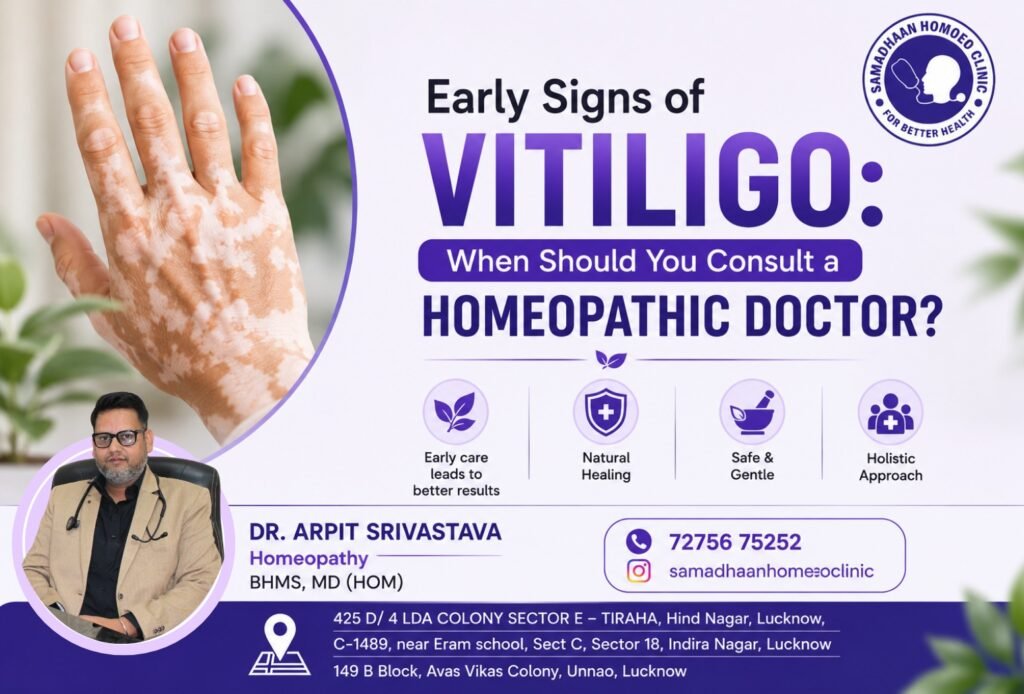
Early Vitiligo Treatment in Lucknow: Why Recognising the First Signs Matters
What Is Vitiligo? A Homeopathic Doctor in Lucknow Explains begins with recognising changes in the skin and getting the right medical evaluation at the right time. Vitiligo is a skin condition in which areas of the skin lose their normal colour because the cells responsible for producing melanin are damaged or destroyed. It can affect people of any age, skin type, or gender and may appear on different parts of the body. The first signs of vitiligo can sometimes be easy to overlook. A small pale patch on the hand, face, lips, around the eyes, or another part of the body may initially look like a minor skin change. However, if the patch gradually becomes whiter, increases in size, or new patches begin to appear, it is important to consult a qualified healthcare professional for proper assessment. At Samadhaan Homoeo Clinic, patients receive individualised care based on their symptoms, health history, lifestyle, and overall well-being. The clinic has been providing homoeopathic healthcare since 1995 and focuses on personalised patient care. Dr. Arpit Srivastava (MD Hom) provides individualised consultations and helps patients understand their skin concerns and available care options. For anyone searching for a Homeopathic Doctor in Lucknow for vitiligo, an early consultation can help clarify whether a change in skin colour is actually vitiligo or another skin condition that may look similar. In this comprehensive guide, we will discuss the early signs of vitiligo, possible causes and risk factors, common areas affected, diagnosis, when you should consult a doctor, lifestyle considerations, and the importance of personalised care. What Is Vitiligo? A Homeopathic Doctor in Lucknow Explains Vitiligo is a chronic skin condition characterised by the development of lighter or completely white patches on the skin. These patches occur when melanocytes, the cells responsible for producing melanin, are lost or stop functioning normally. Melanin gives the skin, hair, and some other parts of the body their natural colour. When melanocytes are absent or significantly reduced in a particular area, that area can appear much lighter than the surrounding skin. Vitiligo is generally considered an autoimmune condition. In many cases, the immune system mistakenly attacks melanocytes. However, the exact reason why this happens is not completely understood. Vitiligo is not contagious. It cannot spread from one person to another through touching, sharing food, sitting together, or other everyday contact. It is also important to understand that vitiligo is not caused by poor hygiene. It is a medical skin condition that deserves proper evaluation and understanding rather than stigma or unnecessary home remedies. If you notice a new white or pale patch, consulting a dermatologist can help confirm the diagnosis. Patients who are interested in complementary homoeopathic care may also discuss their concerns with a Homeopathic Doctor in Lucknow while continuing appropriate medical evaluation and treatment. What Are the First Signs of Vitiligo? The early signs of vitiligo can vary from person to person. In many cases, the first noticeable symptom is a small area of skin that becomes lighter than the surrounding skin. Some common early signs include: A pale or white patch appearing on the skinWhat Are the First Signs of Vitiligo? Gradual loss of colour from a small area Patches becoming more noticeable over time White patches appearing on the hands, face, feet, or arms Loss of colour around the mouth or eyes Light patches appearing around the nose Whitening or loss of pigment in the hair, eyebrows, eyelashes, or beard Loss of colour inside the mouth or around the lips in some individuals Patches developing around areas that experience repeated injury or friction One important point is that not every white patch is vitiligo. Fungal infections, eczema, post-inflammatory changes, pityriasis alba, scars, and other skin conditions can also cause lighter areas on the skin. Therefore, self-diagnosis can be difficult. If you notice an unexplained patch that does not disappear, becomes whiter, or appears to be increasing in size, professional evaluation is recommended. Why Should You Take Early Signs of Vitiligo Seriously? A small white patch may not cause pain, itching, or any other physical discomfort. Because of this, some people may ignore it for months. However, early evaluation is valuable because it helps determine the actual cause of the skin change. If the condition is vitiligo, understanding its type, extent, and progression can help a healthcare professional discuss suitable management options. According to the personalised-care approach followed at Samadhaan Homoeo Clinic, every patient should be evaluated according to their individual symptoms, medical history, lifestyle, and overall health rather than receiving a one-size-fits-all plan. Early consultation can help you: Confirm whether the patch is actually vitiligo Identify other possible causes of depigmentation Understand whether the condition is stable or changing Discuss suitable treatment and management options Address concerns about visible patches Understand how to protect depigmented skin from sun exposure Receive guidance about long-term skin care Get support for the emotional impact of visible skin changes If you are considering Vitiligo Treatment in Lucknow, getting a proper diagnosis should be the first step. What Causes Vitiligo? The exact cause of vitiligo is still being studied. However, researchers believe that several factors may contribute to the development of this condition. Autoimmune Factors In many cases, the immune system mistakenly targets melanocytes. This can lead to the gradual loss of pigment-producing cells and the development of white patches. Genetic Factors Vitiligo can sometimes run in families. Having a family member with vitiligo may increase the risk, although not everyone with a family history develops the condition. Oxidative Stress Melanocytes are sensitive to oxidative stress. Changes in the balance between free radicals and antioxidant systems may contribute to melanocyte damage. Skin Injury In some individuals, new vitiligo patches may develop after repeated trauma, cuts, burns, or friction. This phenomenon is known as the Koebner phenomenon. Associated Autoimmune Conditions Vitiligo may occur alongside certain autoimmune conditions, including thyroid disorders. A doctor may recommend additional evaluation when clinically appropriate. It is important to remember that vitiligo is not caused by touching someone with
