
- Home
- Seborrheic Dermatitis
Seborrheic Dermatitis Treatment in Lucknow
Seborrheic Dermatitis
Seborrheic Dermatitis Treatment in Lucknow
At Samadhaan Homoeo Clinic, we understand that Seborrheic Dermatitis is a common inflammatory skin condition that causes redness, itching, flaky skin, and dandruff-like scales, especially on the scalp, face, ears, eyebrows, chest, and other oily areas of the body. Although it is not contagious, the condition can become chronic and may flare up from time to time if not managed properly.
Our experienced doctors—Dr. R.K. Srivastava (RTD. SMO), Dr. Rashmi Srivastava, and Dr. Arpit Srivastava (MD Hom)—carefully assess your symptoms, skin condition, medical history, lifestyle, stress levels, and overall health before preparing a personalized treatment plan tailored to your individual needs.
Since 1995, Samadhaan Homoeo Clinic has been providing ethical, patient-centered homeopathic healthcare to families across Lucknow, Hind Nagar, Gomti Nagar, Indira Nagar, Alambagh, Ashiyana, Unnao, and nearby areas.
If you are looking for Seborrheic Dermatitis Treatment in Lucknow, our experienced team is committed to providing compassionate, individualized care for patients of all age groups.
What is Seborrheic Dermatitis?
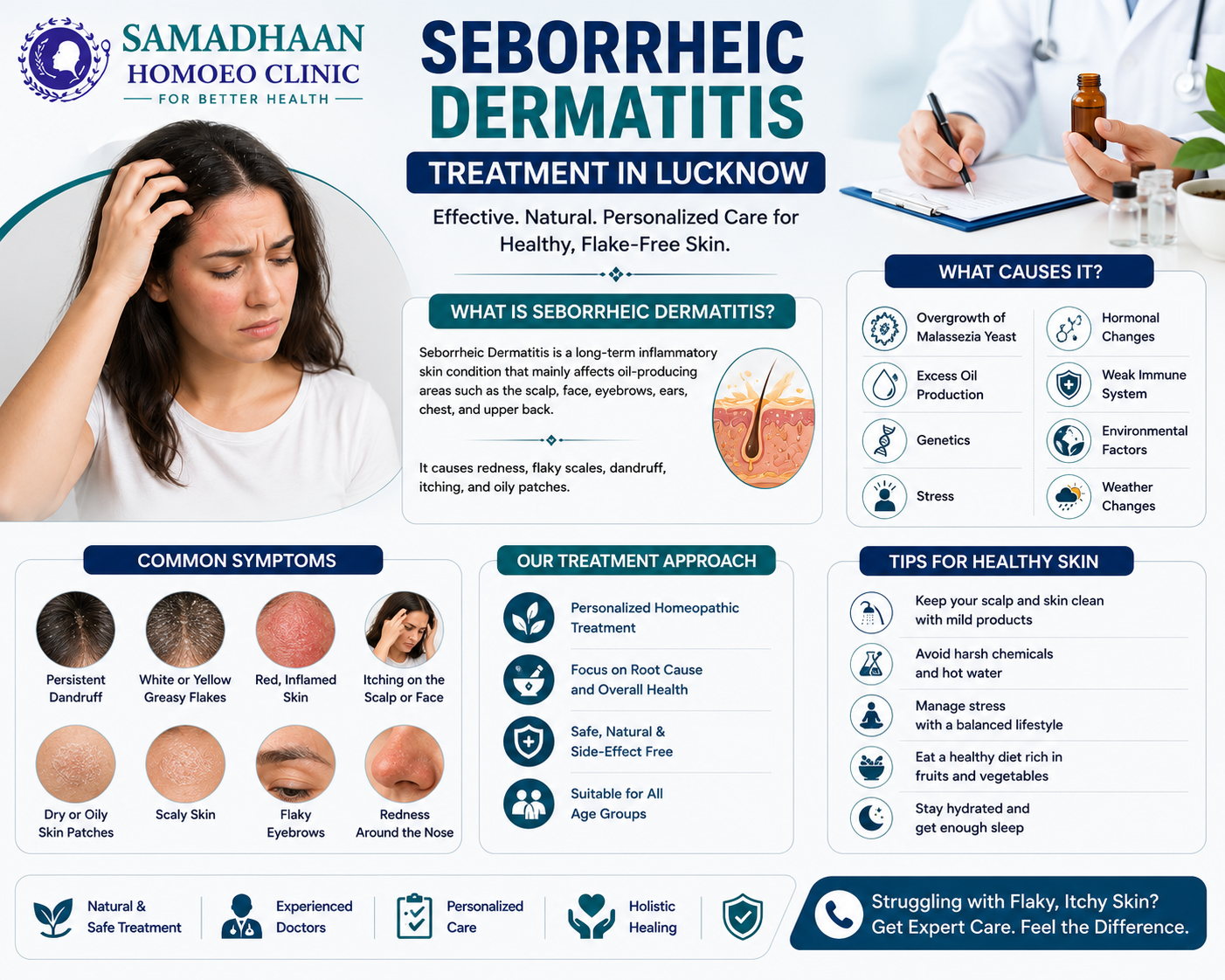
Seborrheic Dermatitis is a long-term inflammatory skin condition that mainly affects areas of the body with a high number of oil (sebaceous) glands. It commonly appears on the scalp, face, eyebrows, sides of the nose, ears, beard area, chest, and upper back. The condition causes redness, greasy patches, white or yellow scales, dandruff, and persistent itching.
Although the exact cause is not fully understood, experts believe that an overgrowth of a naturally occurring yeast called Malassezia, excess oil production, genetics, stress, hormonal changes, and environmental factors all play a role in its development.
Many people searching for Seborrheic Dermatitis Treatment in Lucknow visit our clinic because symptoms often recur and require proper medical evaluation and individualized management.
Common Symptoms of Seborrheic Dermatitis
The symptoms of Seborrheic Dermatitis may vary from person to person depending on the severity and the affected area.
Common Seborrheic Dermatitis Symptoms include:
- Persistent dandruff
- White or yellow greasy flakes
- Red, inflamed skin
- Itching on the scalp or face
- Dry or oily skin patches
- Scaly skin
- Flaky eyebrows
- Redness around the nose
What Causes Seborrheic Dermatitis?
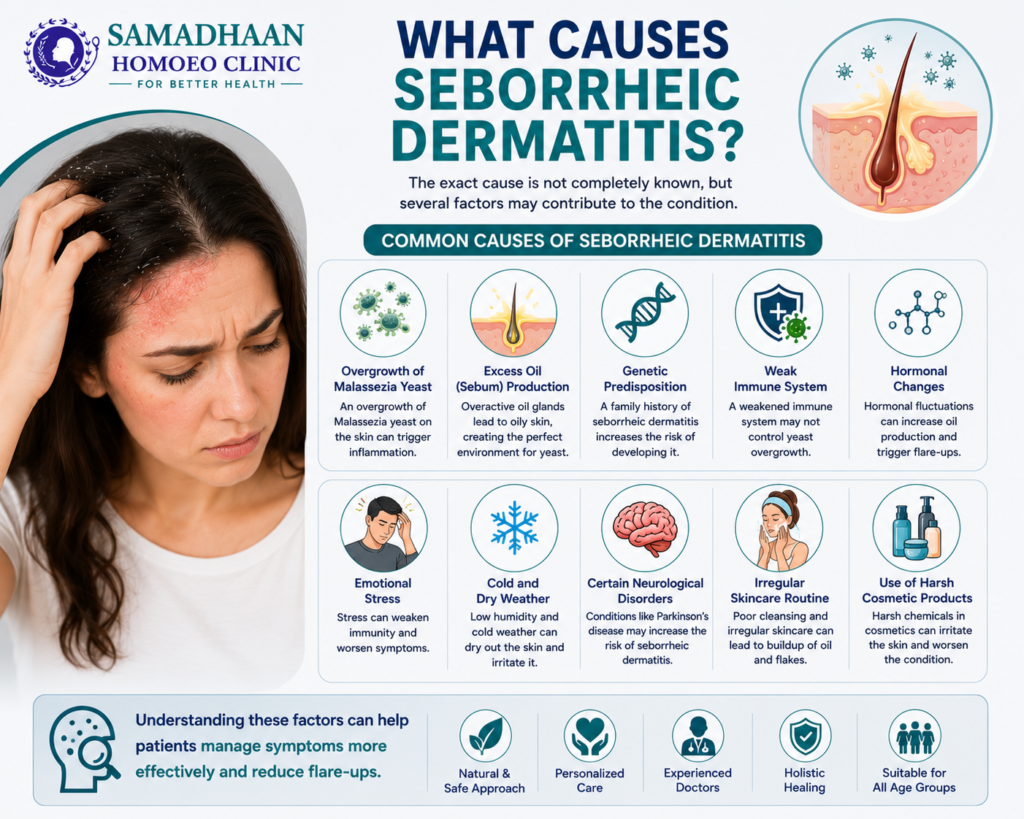
The exact cause of Seborrheic Dermatitis is not completely known, but several factors may contribute to the condition.
Common Causes of Seborrheic Dermatitis include:
- Overgrowth of Malassezia yeast
- Excess oil (sebum) production
- Genetic predisposition
- Weak immune system
- Hormonal changes
- Emotional stress
- Cold and dry weather
- Certain neurological disorders
- Irregular skincare routine
- Use of harsh cosmetic products
Understanding these factors can help patients manage symptoms more effectively and reduce flare-ups.
Who is at Risk of Developing Seborrheic Dermatitis?
Although anyone can develop Seborrheic Dermatitis, some individuals are more likely to experience this condition.
People at higher risk include:
- Infants (Cradle Cap)
- Teenagers
- Adults between 30–60 years
- People with oily skin
- Individuals with dandruff
- People with weakened immunity
- Patients with Parkinson’s disease
- Individuals with HIV/AIDS
- People experiencing chronic stress
- Individuals with a family history of Seborrheic Dermatitis
Early diagnosis and appropriate treatment can help control symptoms and improve overall skin health.
When Should You See a Doctor?
You should seek medical advice if:
- Dandruff becomes severe.
- The itching becomes persistent.
- Redness spreads to different areas.
- The skin becomes painful or swollen.
- Home remedies do not provide relief.
- Symptoms keep coming back.
- You notice yellow crusting or infection.
- Daily activities or sleep are affected.
If you experience these symptoms, seeking Seborrheic Dermatitis Treatment in Lucknow can help you receive the right diagnosis and personalized medical guidance.
Types of Seborrheic Dermatitis
Seborrheic Dermatitis can affect different parts of the body and may appear differently depending on a person’s age, skin type, and overall health. Some people experience mild dandruff on the scalp, while others develop persistent redness, greasy scales, and itching on the face, ears, chest, or other oily areas of the body.
At Samadhaan Homoeo Clinic, our experienced doctors carefully examine the affected skin, understand your medical history, identify possible triggers, and prepare a personalized treatment plan according to your individual health needs. If you are looking for Seborrheic Dermatitis Treatment in Lucknow, early diagnosis and proper medical guidance can help manage symptoms effectively and reduce recurring flare-ups.
Common Types of Seborrheic Dermatitis
Scalp Seborrheic Dermatitis (Dandruff)
The most common form, causing white or yellow flakes, itching, greasy scales, and redness on the scalp. In severe cases, thick crusts may develop.
Facial Seborrheic Dermatitis
This type affects the eyebrows, sides of the nose, forehead, eyelids, beard area, and behind the ears. It often causes redness, flaky skin, and greasy patches.
Infant Seborrheic Dermatitis (Cradle Cap)
Common in newborns and infants, cradle cap appears as thick, yellowish, oily scales on the scalp. It is usually harmless but should be evaluated if severe or persistent.
Body Seborrheic Dermatitis
Some patients develop red, flaky patches on the chest, upper back, armpits, or skin folds where oil glands are more active.
Why Choose Samadhaan Homoeo Clinic?
If you are searching for the Best Homoeopathic Clinic in Lucknow, Samadhaan Homoeo Clinic has been providing ethical, patient-focused healthcare since 1995.
Our experienced team includes:
Dr. R.K. Srivastava (RTD. SMO)
A highly respected senior homeopathic physician with decades of clinical experience in treating both acute and chronic health conditions through individualized care.
Dr. Rashmi Srivastava
Known for her compassionate approach and personalized consultations, she focuses on understanding each patient’s unique health concerns before planning treatment.
Dr. Arpit Srivastava (MD Hom)
An experienced homeopathic physician committed to providing evidence-based, patient-centered, and personalized healthcare for individuals of all age groups.
Together, our doctors are dedicated to delivering quality homeopathic care in a comfortable, supportive, and patient-friendly environment.
Why Personalized Treatment is Important
Every patient with Seborrheic Dermatitis experiences different symptoms, triggers, and flare-up patterns. Some individuals may have mild dandruff on the scalp, while others develop persistent redness, greasy scales, itching, or flaky patches on the face, ears, chest, or other oily areas of the body. The severity of symptoms can vary depending on age, skin type, immunity, stress levels, weather conditions, and overall health.
Patients searching for the Best Seborrheic Dermatitis Doctor in Lucknow often prefer personalized care that focuses not only on managing visible symptoms but also on identifying the factors that may be contributing to recurring flare-ups.
At Samadhaan Homoeo Clinic, our experienced doctors carefully evaluate your skin condition, medical history, lifestyle, dietary habits, stress levels, and overall well-being before preparing an individualized treatment plan designed according to your specific healthcare needs.
Common Risk Factors for Seborrheic Dermatitis
Although Seborrheic Dermatitis can affect anyone, certain factors may increase the likelihood of developing the condition or experiencing frequent flare-ups.
Excess Oil Production
People with naturally oily skin are more likely to develop Seborrheic Dermatitis because excess sebum creates a favorable environment for the growth of Malassezia yeast.
Malassezia Yeast Overgrowth
A naturally occurring yeast called Malassezia lives on healthy skin. In some individuals, excessive growth of this yeast may trigger inflammation, redness, and scaling.
Stress
Physical and emotional stress can worsen Seborrheic Dermatitis and may trigger recurring flare-ups.
Cold and Dry Weather
Symptoms often become more noticeable during winter months when cold temperatures and low humidity dry out the skin.
Hormonal Changes
Hormonal fluctuations may increase oil production and contribute to the development of Seborrheic Dermatitis.
Weakened Immune System
Individuals with weakened immunity may experience more severe and persistent symptoms.
Neurological Conditions
People living with neurological disorders such as Parkinson’s disease may have a higher risk of developing Seborrheic Dermatitis.
Family History
A family history of Seborrheic Dermatitis or other inflammatory skin conditions may increase the likelihood of developing the condition.
Daily Skin Care Tips for Seborrheic Dermatitis
Healthy skincare habits can help reduce irritation and support better management of Seborrheic Dermatitis.
Wash the Affected Area Gently
Clean the affected skin using a mild cleanser and lukewarm water. Avoid scrubbing the skin harshly.
Use a Medicated Shampoo if Recommended
For scalp involvement, using a doctor-recommended anti-dandruff or medicated shampoo may help control scaling and itching.
Keep the Skin Moisturized
Apply a gentle, fragrance-free moisturizer to help reduce dryness and support the skin barrier.
Avoid Harsh Skin Products
Choose mild skincare products and avoid soaps, shampoos, or cosmetics that contain strong fragrances or irritating chemicals.
Manage Stress
Stress management techniques such as regular exercise, adequate sleep, meditation, and relaxation may help reduce flare-ups.
Avoid Scratching
Scratching may increase irritation, redness, and the risk of secondary skin infection.
Maintain Good Personal Hygiene
Regular cleansing, clean clothing, and proper scalp care can help support healthier skin.
Eat a Balanced Diet
A nutritious diet rich in fruits, vegetables, whole grains, and adequate hydration supports overall skin health.
Final Thoughts
Seborrheic Dermatitis is a common inflammatory skin condition that causes redness, itching, dandruff-like flakes, and greasy scales, particularly on the scalp, face, ears, eyebrows, and chest. Although it is not contagious, the condition often follows a recurring pattern and may flare up due to stress, weather changes, excess oil production, or other individual triggers. Early diagnosis, proper skincare, healthy lifestyle habits, and individualized medical guidance can help manage symptoms and improve overall skin health.
At Samadhaan Homoeo Clinic, our experienced doctors carefully assess your skin condition, medical history, lifestyle, and overall well-being before preparing a personalized treatment plan. Since 1995, we have been committed to providing ethical, patient-centered homeopathic healthcare to individuals and families across Lucknow, Hind Nagar, Gomti Nagar, Indira Nagar, Alambagh, Ashiyana, Unnao, and nearby areas.
If you are looking for Seborrheic Dermatitis Treatment in Lucknow, visit Samadhaan Homoeo Clinic for a detailed consultation and personalized care tailored to your individual health needs.
F. A. Q
Frequently Asked Questions
Seborrheic Dermatitis is a chronic inflammatory skin condition that commonly affects oily areas of the body, such as the scalp, face, ears, eyebrows, chest, and upper back. It often causes redness, itching, dandruff-like flakes, and greasy scales.
Common symptoms include dandruff, white or yellow greasy flakes, itchy scalp, redness, scaly skin, flaky eyebrows, redness around the nose, beard dandruff, burning sensation, and persistent skin irritation.
The exact cause is not fully understood, but factors such as Malassezia yeast overgrowth, excess oil production, genetics, stress, hormonal changes, weather conditions, and a weakened immune system may contribute to its development.
No. Seborrheic Dermatitis is not contagious. It cannot spread from one person to another through physical contact, sharing personal items, or close interaction.
You should consult a doctor if your symptoms become persistent, the itching or redness worsens, dandruff does not improve with routine care, skin becomes painful or infected, or the condition keeps recurring despite home care.
The experienced doctors at Samadhaan Homoeo Clinic—Dr. R.K. Srivastava (RTD. SMO), Dr. Rashmi Srivastava, and Dr. Arpit Srivastava (MD Hom)—provide personalized consultations and individualized treatment plans based on each patient's skin condition and overall health.
Homeopathy focuses on individualized treatment by considering a patient's symptoms, medical history, lifestyle, and overall health. At Samadhaan Homoeo Clinic, personalized treatment plans are prepared after a detailed consultation to support long-term skin health.
Yes. Seborrheic Dermatitis is a chronic condition that may recur from time to time. Following a proper skincare routine, managing stress, avoiding known triggers, and seeking timely medical guidance may help reduce the frequency and severity of flare-ups.
